Redefining Women's Football Punditry: A Debate on Inclusion and Representation
The debate surrounding women's football punditry takes center stage as Laura Woods challenges Eni Aluko's views on gender representation in sports broadcasting. Explore the complexities and nuances of this ongoing conversation.
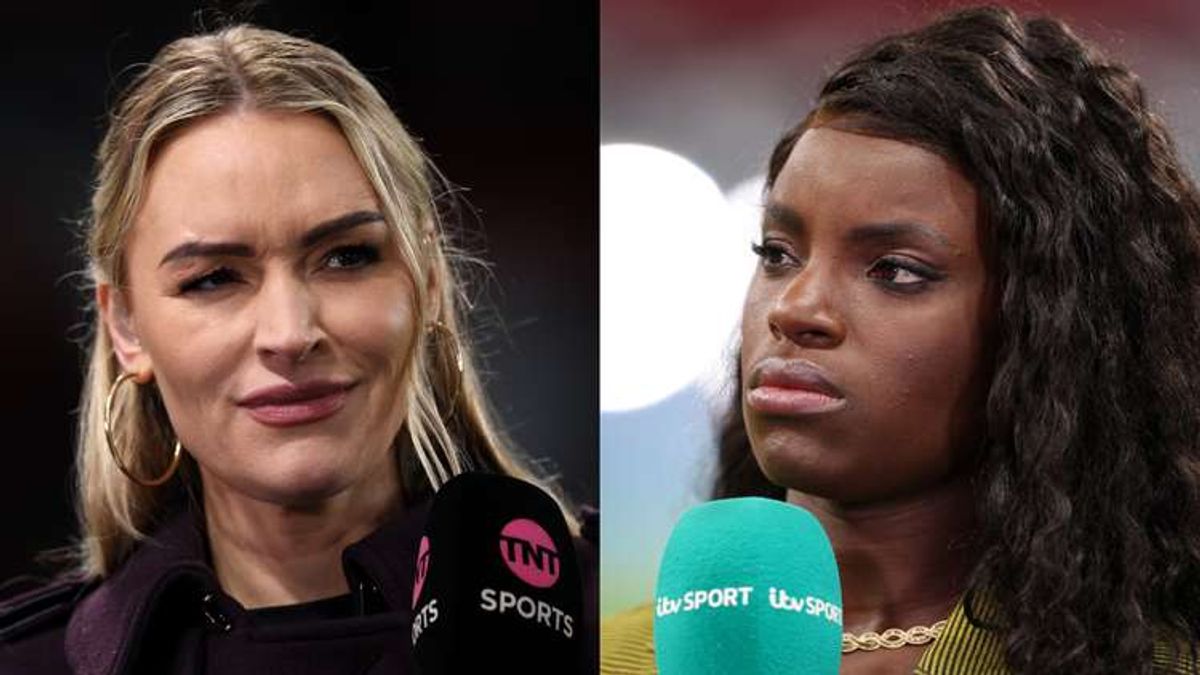
Laura Woods has fired back at former Lionesses star Eni Aluko after seeing the ex-England international suggest that “the women’s game should be by women, for women”. Aluko has previously taken issue with Ian Wright enjoying a prominent role in coverage of women’s football, claiming the Arsenal great is “dragging women’s punditry backwards”. TV presenter Woods, who regularly hosts men’s and women’s games, has picked holes in Aluko’s arguments.Aluko sparked controversy in April 2025 when telling former England striker Wright that he needs to be aware of “how much he's doing in the women's game”. She claimed that Wright’s presence was making it tougher for female pundits to break into the industry.She has since apologised, but Wright has refused to accept her stance - with many siding with the Gunners legend. Aluko has been speaking out again, with Woods feeling the need to address comments that she believes are doing nobody any favours.She said in a series of social media posts: “Caps don’t win automatic work and they don’t make a brilliant pundit either. The way you communicate, articulate yourself, do your research, inform your audience, how likeable you are and the chemistry you have with your panel are what makes a brilliant pundit.“‘The women’s game should be by women for women’, is one of the most damaging phrases I’ve heard. It will not only drag women’s sport backwards, it will drag women’s punditry in all forms of the game backwards.“If you want to grow something, you don’t gate keep it. We want to encourage little boys and men to watch women’s football too, not just little girls and women. And when they see someone like Ian Wright taking it as seriously as he does - they follow suit. That’s how you grow a sport.”Looking for smarter football bets? Get expert previews, data-driven predictions & winning insights with GOAL Tips on Telegram. Join our growing community now!Aluko worked alongside Woods as part of ITV’s team that covered the Lionesses’ successful defence of their European Championship crown in 2025. She did not work on the final, with Wright joining Karen Carney and Emma Hayes on screen.Ex-Manchester City defender Nedum Onuoha was part of the BBC pack, with Aluko telling the ‘90s Baby Show’ when airing her latest grievances: “Last year at the Women's Lionesses final, I'm sat in the stands, I wasn't on it for ITV for the final. Farah Williams was next to me. Farah Williams has 170 caps for England.“The two broadcasters that had the rights, ITV, BBC. On BBC, you've got Ellen White, Steph Houghton and Nedum Onuoha. No offence to Nedum Onouha, nothing against him, I don't know whether he played for England or not. You're on the main panel for the final for England Women.“Let's go over to ITV, I'm in the stands with 105 caps, so you have got two women with 290 caps, something ridiculous right. Right ITV, it's Ian Wright, Emma Hayes and Kaz Carney.“So out of six spots, two have gone to men, meanwhile you have got 290 (caps) sitting in the stands. I have never done a final and I am probably going to struggle to think of any woman, female pundit, who has done a men's major final.“I am talking about as a pundit, so something is not right there. Why are people like me and Faz (Fara) not there. It is nothing against Ian and nothing against them, I am just saying broadly speaking we need to be aware of that.”Aluko added: “From my perspective we didn't go through all of that blood, sweat and tears for women to now be second place in our own sport. What are we doing? The women's game should be by women, for women. Male allies should absolutely support that, but when it gets to the point where you are the main character of the show, we are just repeating the patriarchal stuff we have been fighting against.“Whoever that upsets, that upsets. I have always been protective about women's football. I was doing women's football when it didn't pay to do women's football. Now we are reaping the rewards, I am like, women should be winning right now.”Add GOAL.com as a preferred source on Google to see more of our reportingShe went on to say of being overlooked for major roles within the men’s game: “The limited opportunities in the women's game are now being taken by men, but we can't go into the men's game and take the same opportunities. We are stuck. I can never do the men's final. The only way I have an opportunity to do a final is the women's final and now I can't do the women's final.“What I represent for young girls who want to be footballers, who want to be broadcasters, is way more than Ian Wright represents. Again, I am not knocking Ian Wright, it is not even about him, it could be any man. It is really important that we keep an eye on premium opportunities. The issue I have with Ian is that in his position, he needs to clock what I am saying.”Aluko claims to have received limited offers since speaking out against Wright. The next major international tournament in the women’s game will be the World Cup in 2027 - which is heading to Brazil. Domestic and continental competition continues for now, with thrilling WSL and Champions League title races playing out in 2025-26.
Challenging Traditional Notions of Punditry
Laura Woods has entered the fray by questioning Eni Aluko's stance that 'the women's game should be by women, for women'. In a series of social media posts, Woods emphasizes that merit and expertise, not gender alone, should determine a pundit's success. She highlights the importance of communication skills, research, audience engagement, and chemistry with the panel as crucial factors in punditry excellence.
Inclusive Growth of Women's Football
Woods argues that restricting punditry roles based solely on gender could hinder the growth of women's football. She advocates for inclusivity, encouraging men and boys to engage with the sport to foster a more diverse audience. By showcasing the dedication and professionalism of pundits like Ian Wright, Woods believes that women's football can attract a broader fan base and inspire future generations.
Representation and Opportunity
Eni Aluko raises valid points regarding the representation of female pundits in major broadcasting roles. Aluko's concerns about the distribution of opportunities and recognition within sports media shed light on the challenges faced by women seeking a prominent voice in football punditry. Acknowledging her experience and expertise, Aluko advocates for a more equitable platform for female professionals in the industry.
The Path Forward
As the discussion on women's football punditry evolves, it is essential to consider a balanced approach that values both merit and diversity. By fostering a supportive environment for women in sports media and addressing systemic barriers to entry, the industry can promote inclusivity and amplify diverse voices. Collaborative efforts from both male and female stakeholders are necessary to drive positive change and ensure equal opportunities for all.
Looking Ahead
With the upcoming World Cup in 2027 and ongoing domestic competitions, the spotlight on women's football continues to grow. As the narratives around gender representation and inclusivity in sports broadcasting unfold, it is a pivotal moment to redefine traditional norms and advocate for a more inclusive and diverse landscape in football punditry.