Real Madrid: Player Power Reigns at the Bernabeu as Xabi Alonso's Coaching Efforts Fall Short
The struggles of Xabi Alonso as Real Madrid manager highlight the influence of player power at the Bernabeu, showcasing the challenges faced by coaches in managing a team of individual superstars. The clash between team unity and individual ambitions ultimately led to Alonso's departure. Let's delve deeper into the complexities of coaching a high-profile club like Real Madrid.
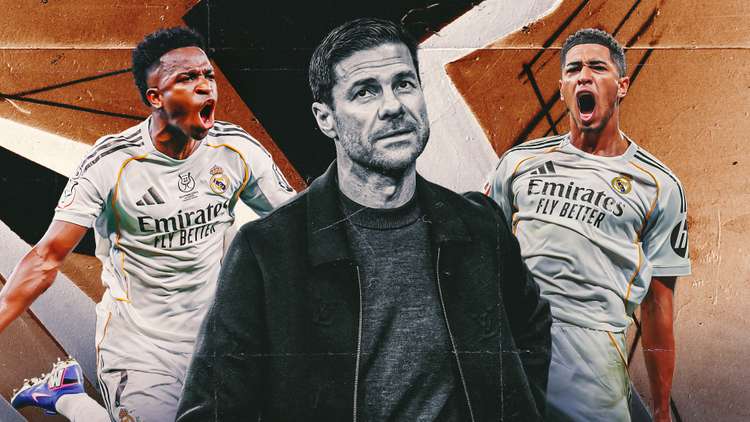
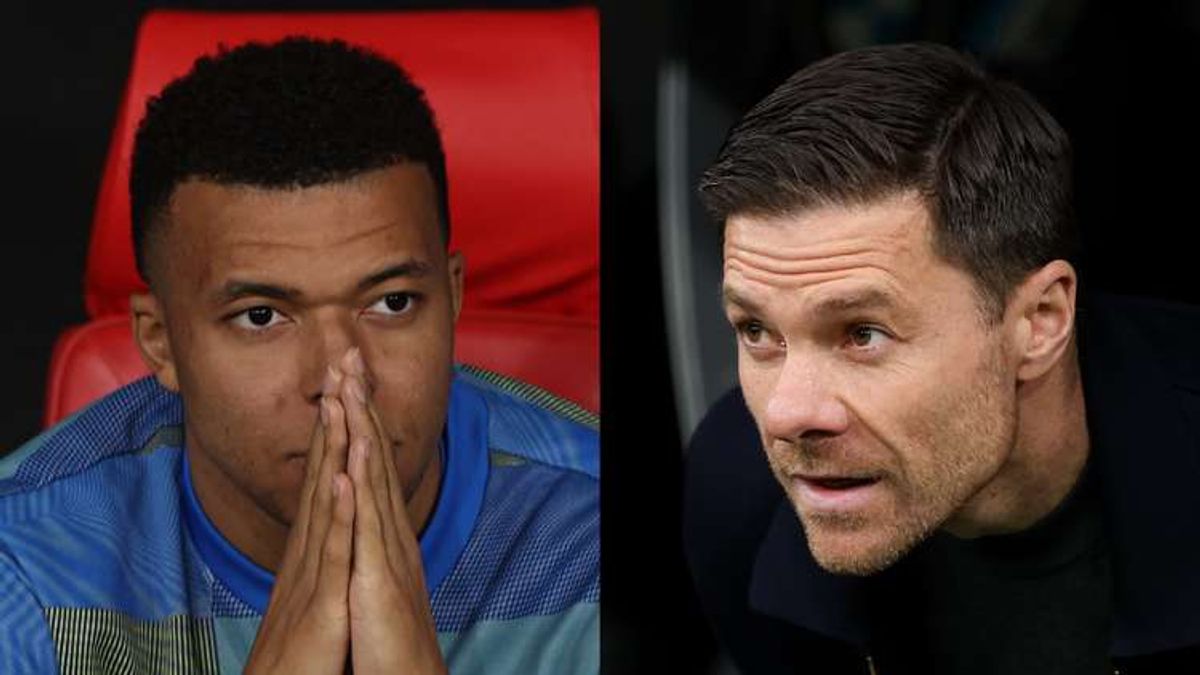
The final image of Xabi Alonso as Real Madrid manager - and one that tells the story of his time in charge at the Bernabeu - was of someone else telling him what to do. After Sunday's Supercopa de Espana loss to Barcelona, Alonso gestured to his players that they should give a guard of honour to their victorious opponents as they went to collect the trophy. Kylian Mbappe, though, was having none of it, and insisted his team-mates follow his lead. They did just that - and so too did Alonso.That is Real Madrid in a microcosm. Alonso, the coach, was all about team spirit, togetherness, doing the right thing as a sporting unit. He's a man of principles, and that moment was one of the more basic ones: Treat the opposition with respect. But when managing a group of Galacticos, the individuals who each alone consider themselves bigger than their own badge, never mind that of an opponent, those principles need to be put to one side.In 2026, the players are right. Mbappe, like Vinicius Jr and Jude Bellingham, are now bigger than any club, any jersey, and certainly any manager. These men are all successful brands that Alonso tried, in a quite valiant failure, to treat like footballers.Alonso is a truly excellent coach who has shown in an immensely successful spell at Bayer Leverkusen that he is one of the game's most effective tacticians. Give him the right squad, full of more eager and, frankly, coachable players, and he can work wonders. He will, in all likelihood, land in a spot where he gets the chance to prove that his spell in Germany was no fluke. But for this Madrid, he was the wrong manager from the start. Madrid are, for want of a better term, uncoachable. They cannot be moulded into modern, high-pressing, Pep Guardiola-esque footballers who settle for a team-based interpretation of the game. Instead, they are a collection of individuals who need to be given the right ideas, and an authoritarian figure to keep them in line. Alonso is not that, and was ultimately outdone by the Galacticismo that dominates the Bernabeu. It is important to remember that there was a real excitement when Alonso took charge. It was widely assumed that he would be either the Real Madrid or Liverpool manager when he finished his stint at Leverkusen, and while Liverpool went in another direction with Arne Slot after Jurgen Klopp's resignation, Madrid made the timing work when they decided to part with Carlo Ancelotti.The early vibes were good. At his introductory press conference, Alonso made all of the right noises. He talked about his deep connection with 'Madridismo', filmed his introductory video in front of 'La Decima', the 10th European Cup Los Blancos lifted while he was in the team, and acknowledged that he had been in contact with Ancelotti while claiming that Madrid would be highly watchable.“I want the people who see us to say, ‘This is the team I like’, that people go to the stadium to enjoy," he said.Madrid fans had perhaps lost their connection with a club a little bit during Ancelotti's final days as manager. Madrid weren't winning much while Barcelona walked to the title and came within an Inter miracle of playing in the Champions League final. Madrid had to face the harsh reality that they were not only second-best in their league - something hard to accept - but well down the pecking order when it came to Europe.Alonso was here to change that, and he claimed he deeplyunderstood what it meant to take charge of the club. That was May 27, and two weeks later, Madrid sent Alonso and his players to the United States for the Club World Cup. In hindsight, that job should have been handed to someone else given Alonso reportedly wanted to take the reins after the competition.It was clear to see why, too. Madrid looked exhausted in the U.S., and Alonso was a bit erratic with his plans. His team looked and played like Ancelotti's side, albeit without Mbappe, who missed the team's opening four games due to stomach flu. Vinicius Jr never fully get going, either, and nor did new signing Trent Alexander-Arnold, whom Madrid had paid €10 million for so that he could be released by Liverpool a month early. Rodrygo, meanwhile, barely made it off the bench,Madrid were eventually battered by a brilliant Paris Saint-Germain in the semi-final. After that game, Alonso remarked that this Madrid wasn't really his team, and that he was merely overseeing the end of Ancelotti's reign. The real work, he promised, would start once the players got back from holiday. It was clear that Alonso wanted to coach. After all, that is what he is good at. Sure, he can make all of the noises about being a man-manager and motivating his players, but at his very heart, Alonso is the deep-lying playmaker who saw the game far easier than everyone else. He believes in positional play, pressing off the ball and piecing together the right build-up patterns. Sure, his teams are fluid, and he is capable of changing in accordance with the talents available, but Alonso also needed Madrid's main men to change their attitudes.He, perhaps reluctantly, chose to play a 4-3-3 with Mbappe through the middle, albeit Rodrygo struggled to force his way back into the line up, with Arda Guler or teenager Franco Mastantuono largely preferred to the Brazilian on the right. And while it was a system that allowed Mbappe to score frequently and Guler to strike up a strong understanding with the France captain, others struggled to perform to their capabilities.Shorn of Luka Modric and still without a Toni Kroos replacement, the rotating cast in midfield could never figure out the exact spots to be in, and there were subsequently gaps everywhere, allowing Madrid to be hit too easily on the break. Organised opponents who could stop Madrid's high-powered attack - most notably Manchester City and Liverpool in the Champions League - made reasonably comfortable work of them. Of course, in some senses, Alonso was tactically at fault. At Leverkusen, he was a 3-4-2-1 loyalist who used two creative No.10s and a central striker whose main job was to link the play rather than score goals. A lot of the creativity of those sides came from wide areas - something Los Blancos quite clearly lack, particularly with Alexander-Arnold having spent most of his time at the Bernabeu thus far in the treatment room. There was a happy medium to be found, but Alonso could never quite identify it. Add GOAL.com as a preferred source on Google to see more of our reportingThe thing that did for Alonso, however, was his inability to control the egos that run the Real Madrid dressing room.A lot has been made of the incident between Vinicius and Alonso during El Clasico in October. The Brazilian was visibly upset at being substituted, and complained to his manager before storming down the tunnel. This was not necessarily new behaviour from Vinicius, who frequently clashed with Ancelotti - even when he was in Ballon d'Or-contending form - but it did lead to reports that the forward would refuse to enter contract talks (his current deal ends in 2027) while Alonso remained in charge.Alonso never gave Vinicius total attacking freedom, and consistently replaced him during games, something which infuriated the former Flamengo talent. For what it's worth, Vinicius' performances have not been good enough for over a year now, and his goal in Sunday's Supercopa final ended an 18-match drought.While that was going on, Mbappe scored goals for fun. His off-ball work still left plenty to be desired, but he willingly maintained a more central role rather than drifting out to the left as he so often did during his debut season in Spain. The result has been 29 goals in 25 games across all competitions to put him among the frontrunners for the Ballon d'Or.What was supposed to be a season of finding harmony instead became a power struggle. Alonso aligned with Mbappe while Vinicius had the backing of Florentino Perez and the Madrid hierarchy. That's not to mention Rodrygo's struggles or reported issues with Bellingham that came to dominate the Spanish sports papers.All of those things wouldn't have mattered if results were good, and for a time they were. When Madrid beat Barca the Bernabeu in October, they moved five points clear at the top of La Liga having also won all three of their opening Champions League games.Defeat at Anfield 10 days later, however, sparked a run of eight games during which Madrid won just two and fell off the pace both domestically and in Europe. They now sit four points behind Barca at the halfway stage of the Liga campaign, while wins over Monaco and Benfica will guarantee them a place in the Champions League's last 16 without having to go through the play-off round. Madrid are still alive in three competitions even if they aren't the outright favourites to win any of them.Yet in Madrid, performances and perceptions can matter far more than scorelines. Managers have been sacked for not winning leagues well enough, after all. But when results and performances are both under-par is when the real problems begin.Heading into Sunday's Supercopa final, there was a real sense that Alonso needed a win. Reporting at the time suggested that he would keep his job no matter the outcome, but the vibes were still ominous, and the 3-2 loss pretty much encapsulated everything wrong with Madrid right now. They scored one excellent goal via Vinicius and Gonzalo Garcia bundled in another, but they conceded a trio of immensely preventable ones.Worst of all, this came against Barcelona, who, with the win, secured back-to-back Super Cups, the most important of the least important trophies. Whether it was Alonso or Madrid who made the final call on his future, things had become untenable.What comes next is tricky for pretty much everyone but Alonso, who will inevitably come out of these eight months with his reputation mostly intact. He tried to stick to his principles, but was ultimately chewed up and spat out by the notoriously fickle Madrid dressing room. Remember, this is a team who eventually got too much Zinedine Zidane and Ancelotti to handle. As such, Alonso will find a new job, most likely next summer. Manchester United are already in the market for new man in the dugout, and it wouldn't be a shock if Liverpool, Chelsea, Manchester City, Tottenham and even PSG joined them for various reasons.Make no mistake, intentionally or otherwise, the Madrid players got Alonso sacked. Sure, they can put out messages of thanks on social media and say the right things in interviews, but this is a group that has more power than the man in the dugout. They are the real ones in charge, and Alvaro Arbeloa, who's up next, will have to find some way to handle that. Everything seems to be crying out for an overhaul. There are too many stars here, and no managers capable of reining them in. Madrid's belief is that they are a special club who can rise above normal convention. But now, after forcing one of the world's best managers out of the door, that belief might start doing them more harm than good.
The Galacticos Era: A Challenge for Team Coaching
Xabi Alonso's tenure as Real Madrid manager was marked by the clash between his principles of team spirit and the individualistic nature of the Galacticos. Players like Kylian Mbappe and Vinicius Jr exemplified the power dynamics within the squad, where individual brands often overshadowed team unity.
Tactical Struggles and Ego Management
Alonso's tactical approach, rooted in fluid play and high pressing, failed to fully resonate with the Madrid squad. The inability to control player egos, as seen in conflicts with Vinicius Jr and reported issues with other players, highlighted the challenges of managing a star-studded team with divergent ambitions.
Results vs. Performance: The Pressure on a Madrid Manager
While initial success hinted at a promising start for Alonso, a dip in results and performances unraveled his tenure. The Supercopa de Espana loss to Barcelona exemplified Madrid's shortcomings under his leadership, leading to his departure amidst mounting pressure from players and the club hierarchy.
Lessons Learned and the Future Ahead
Alonso's experience at Real Madrid serves as a cautionary tale for aspiring coaches in elite football. The delicate balance between managing player egos, tactical demands, and club expectations highlights the complexities involved. As Real Madrid navigates a transition, future managers will need to find a way to harness player power while maintaining team cohesion.