Manchester United's Path to Redemption: Embracing Club Legends like Ole Gunnar Solskjaer and Darren Fletcher
In the aftermath of the tumultuous Ruben Amorim era, Manchester United find themselves at a crossroads. The pursuit of elite operators within the rigid INEOS system has led to clashes and controversies. It's time for a return to the club's roots, with figures like Solskjaer and Fletcher embodying the spirit and ethos of the Red Devils.
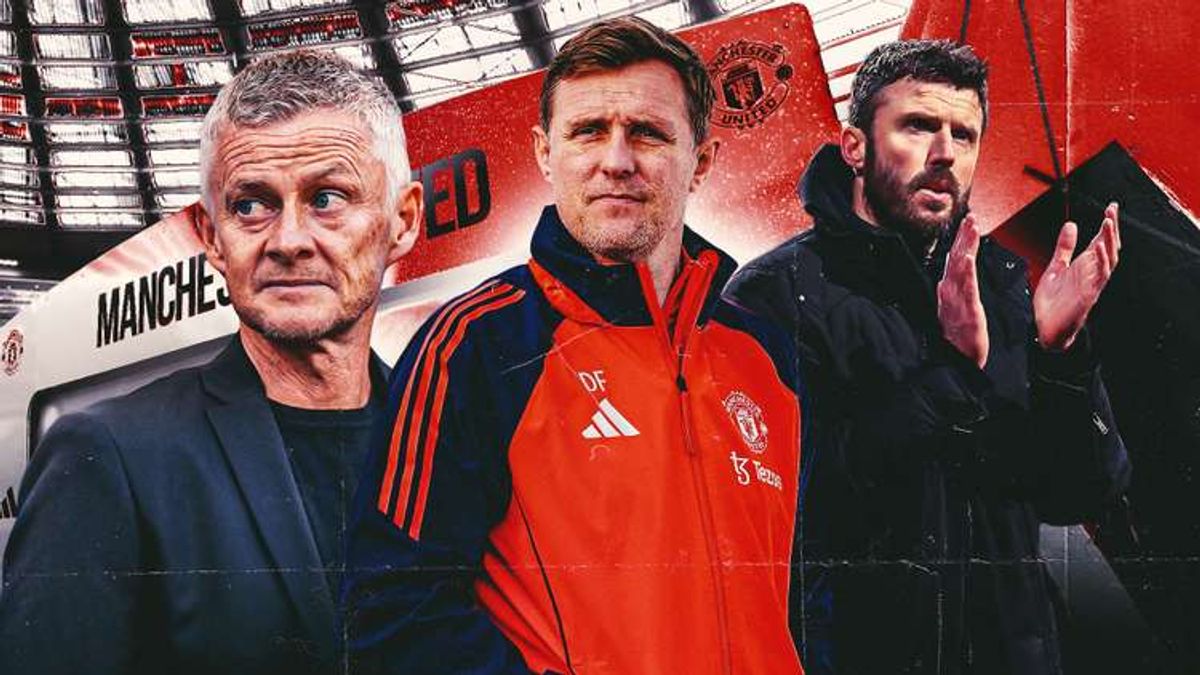
In the end, Ruben Amorim could not handle being told what to do by other people. Despite being the first man in Manchester United's history to be appointed under the title of 'head coach' rather than 'manager', he decided that he wanted the latter role. What he ultimately meant is that he wanted control, and he certainly did not want others meddling in his business.Amorim should have seen this situation coming. Thomas Tuchel certainly did. According to the respected German television pundit Marcel Reif, Tuchel was excited about taking charge of United in the summer of 2024 until he learned that he would not have the final say on transfers. He had been in a similar position previously with Chelsea and Bayern Munich, and reportedly vowed, 'I won’t do that to myself again'.Amorim, though, felt that not only did he not have the final say on transfers, he did not have the final say on his tactics, and 'blew up' when director of football Jason Wilcox spoke to him about changing his system. Wilcox certainly had reasons for encouraging Amorim to adapt - even though he had been told time and time again by the Portuguese that he was not going to - as United were failing to earn positive results in too many winnable games.Erik ten Hag's desire for control - he had a veto on transfers - also put him on a collision course with United's directors. The club's new regime of INEOS controlling the football operation is going to either put off elite candidates like Unai Emery and Oliver Glasner or eventually become unworkable a year or so down the line when whoever succeeds Amorim does not get their way.As long as INEOS want to dictate how United is run, and especially if they want to do it on a tight budget, the only solution is to look to those who know the club inside-out and who care more about the Red Devils than their own careers. Former United defender Phil Jones recently told GOAL that"the United shirt is heavy to wear", and the dugout has also proven inhospitable to every coach who has stepped into it since Sir Alex Ferguson retired. David Moyes was shocked about how different managing United was to taking charge of Everton, while despite Louis van Gaal and Jose Mourinho past lives at Barcelona and Real Madrid, respectively, they too were taken aback by the magnitude of the job at Old Trafford.Ten Hag, meanwhile, was one of the most coveted coaches when he stepped into the fold, while Amorim had been on the shortlists of Liverpool and Manchester City before United hired him. Both managers had excellent reputations and track records in their own countries, but they struggled to get to grips with the Premier League and above all the intense spotlight on them at United.Ten Hag did not enjoy being the subject of Jamie Carragher's Sky Sports analysis on Monday Night Football, and while Amorim claimed to not pay attention to the media, his final comments before being sacked cited Gary Neville. Constantly being ripped apart by former United captain Neville, whom he previously said "is critical of everything", clearly rattled him.The only people who understand how big this club is are those that have lived inside it for many years. It is why Ole Gunnar Solskjaer, Darren Fletcher and Michael Carrick are the most compelling candidates for United right now. They do not need a crash course in how the club works, how every word you utter reverberates around the world and can be twisted to suit someone else's agenda.They also know what makes United players tick, and that going to war with a member of the first-team squad is never a good idea. Solskjaer never publicly spoke out against the players during his three years in charge. Instead, he took a group that had been beaten down by Mourinho's negativity and led them on a run of 14 wins in his first 17 matches.The Norwegian's three-year stint was full of ups and downs and there's no getting away from the fact that he oversaw some shocking results, such as losing 5-0 at home to Liverpool or 6-1 at home to Tottenham. And yet Solskjaer secured back-to-back top-four finishes in his two full seasons, the only United coach since Ferguson to do so. He also made the club a much happier place to be after Mourinho, and came agonisingly close to winning a trophy, too, as he took United to a Europa League final, where they lost to Villarreal after a marathon penalty shootout, and three domestic cup semi-finals.Add GOAL.com as a preferred source on Google to see more of our reportingSolskjaer knew that the carrot, rather than the stick, was more effective at United. The Norwegian would never have called his team "the worst in history", a damning claim made by Amorim which only served to further drain the squad's confidence, nor ridiculed individuals like Marcus Rashford or Alejandro Garnacho. He would also never have spoken out against the academy, the club's biggest source of pride, by calling out youngsters like Harry Amass or Chido Obi.While Amorim seemed to have a great bond with his players at Sporting CP, it is difficult to want to perform for a coach who keeps on criticising you in public. Fletcher, the Under-18s coach who will take charge of the first team against Burnley on Wednesday, also makes a lot of sense right now. He has been around United in a variety of roles since October 2020 following a 13-year career as a Red Devils player, meaning he knows the squad perfectly, as well as the academy.Solskjaer and Fletcher - or Carrick, who was the Norwegian's assistant and briefly became interim coach when Solskjaer was sacked in 2021 - are far more likely to get a response from the team or the crowd. Amorim often talked about the players and fans feeling anxious at Old Trafford, but it was difficult for supporters to get excited about the often predictable football they were playing. By contrast, the atmosphere at Old Trafford was at its best when Solskjaer was in charge as fans felt a real identity within the club.But INEOS should not just look to United's soul to make fans happy. After all, fan welfare has hardly been a priority for a regime which has sent ticket prices rocketing, and thus they need to lift the mood to protect themselves. Ratcliffe's swingeing cuts and mass redundancies, coming after almost two decades of decay under the Glazer ownership, have badly reduced morale around the club. But a coach that understands what it means to represent United can really lift the mood.There is also a financial motive for looking within. United have burned through £42 million in little more than a year on bad appointments. It cost £10.4m to sack Ten Hag and his staff in October 2024, while two months later United sacked director of football Dan Ashworth after only five months in the role, costing £4.1m. Hiring and firing Amorim, meanwhile, is set to cost almost £27m, as United paid out his contract at Sporting and now have to pay off the remaining 18 months of his deal at Old Trafford. United can ill-afford another expensive hire after their total debt climbed to a record £1.29 billion ($1.72bn).Solskjaer and the other club legends who have moved into coaching are not in it for the money; they merely want to help the club. Their love for United also means they will be more willing to work with, not against, the likes of Wilcox and director of recruitment Christopher Vivell.It might seem that re-hiring Solskjaer or taking a chance on Fletcher or Carrick is a return to the days of Ed Woodward and undermines all the work that Ratcliffe has done in reshaping the club's structure in a bid to align with the other top teams in Europe. But the INEOS chief and his colleagues at United have ended up building a structure which is only like to repel the very top coaches. They might want 'best in class', but are quite reluctant to pay for it. After two years of eating away at the club's soul, it is time to go back to its roots.
The 'Manager' vs 'Head Coach' Conundrum
Ruben Amorim's tenure at Manchester United was marred by clashes over control and decision-making. His desire for autonomy clashed with the hierarchy's vision, leading to his eventual departure. This power struggle highlights the challenges of fitting elite coaches within the constraints of the INEOS system.
Lessons from Tuchel and Ten Hag
Notable managers like Thomas Tuchel and Erik ten Hag have shied away from the restrictive environment at United, where control over transfers and tactics is heavily managed. Their reluctance to compromise serves as a cautionary tale for future managerial appointments.
The Case for Club Legends
Ole Gunnar Solskjaer, Darren Fletcher, and Michael Carrick emerge as compelling candidates for Manchester United's coaching position. Their deep-rooted connection to the club, understanding of player dynamics, and respect for club traditions make them ideal choices to navigate the challenging landscape at Old Trafford.
Balancing Tradition and Progress
While INEOS's restructuring aimed at aligning United with the elite clubs in Europe, it has inadvertently alienated top coaches and fans alike. By embracing club legends who prioritize United's values over personal ambitions, the club can forge a path to success rooted in heritage and community.
Financial Prudence and Club Welfare
Manchester United's recent managerial changes have incurred significant financial costs, adding to the club's mounting debt. The pragmatism of appointing club legends like Solskjaer and Fletcher lies in their commitment to the club's well-being and long-term sustainability, beyond monetary considerations.
A Return to Roots
As Manchester United grapple with internal strife and external pressures, a return to their foundational principles and values becomes imperative. By entrusting the reins to individuals who epitomize the club's essence, United can pave the way for a renaissance built on loyalty, passion, and unity.